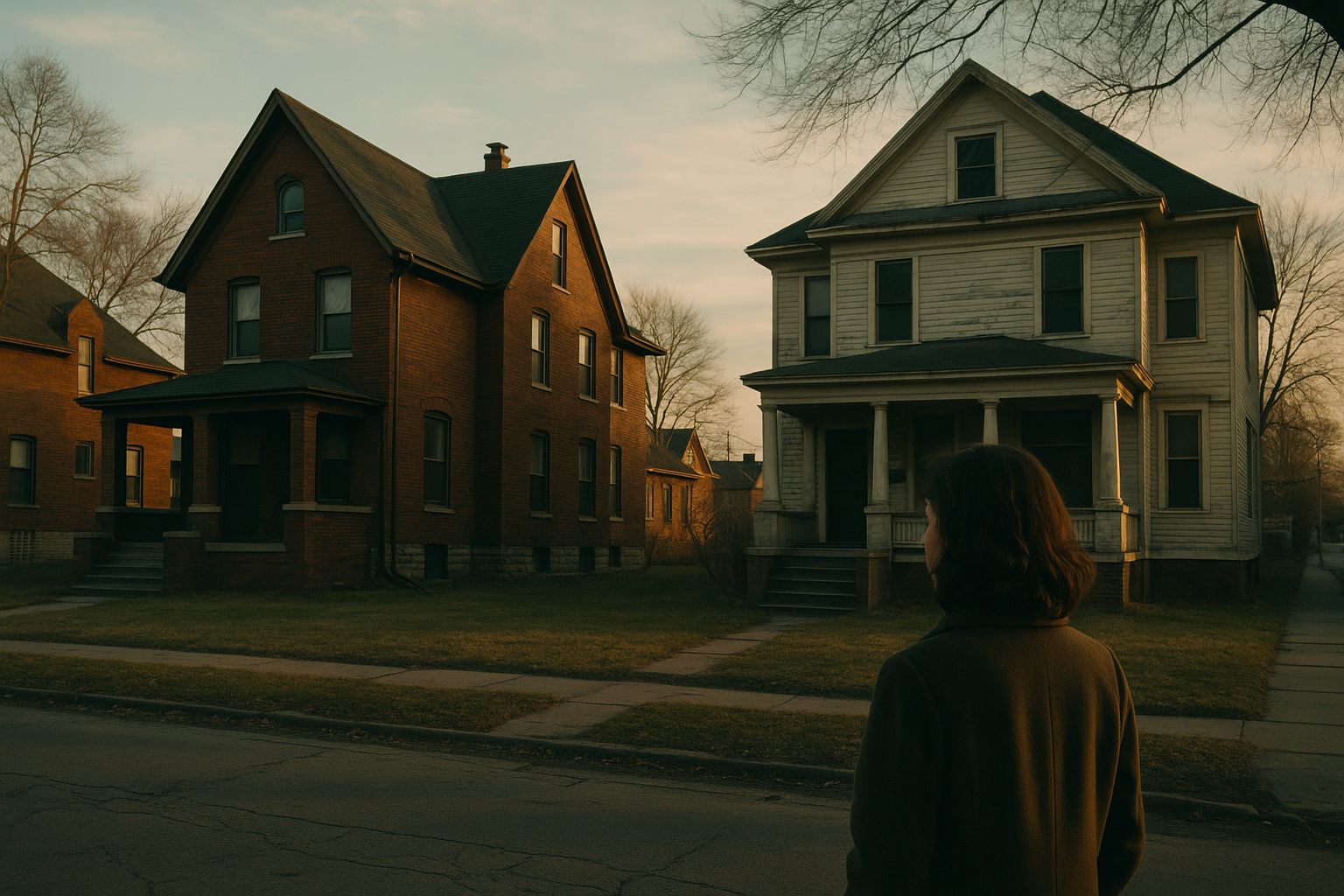
Detroit Real Estate 2026: Comeback Story or Contrarian Trap?
The Motor City is selling again, but the comeback narrative hides some hard truths.
Detroit home prices climbed roughly 8% year-over-year through late 2025, inventory is tighter than it's been in a decade, and you can't scroll past a finance podcast without hearing someone pitch the city as the contrarian play of the decade. The question isn't whether Detroit has momentum. It does. The question is whether that momentum is durable enough to justify moving your life or capital there in 2026, or whether you're buying into a narrative that's already priced in. This article walks through what's actually happening on the ground, neighborhood by neighborhood, price tier by price tier, so you can make the call without the hype.
The case for Detroit: what's actually driving demand
Start with the fundamentals. Metro Detroit added around 15,000 jobs in tech, healthcare, and advanced manufacturing between 2023 and 2025, per Bureau of Labor Statistics data. Companies like Google, Microsoft, and Ford are expanding footprints in and around the city. Remote work didn't kill Detroit. It gave people permission to move somewhere cheaper than Austin or Denver while staying plugged into national salary bands. Median household income in Detroit proper is still only around $35,000, but in the inner-ring suburbs like Ferndale, Royal Oak, and Birmingham, you're looking at $70,000 to $110,000. Those are the zip codes where inventory is vanishing.
The other driver is cost. A renovated 1,400-square-foot bungalow in Corktown or Woodbridge that would run $850,000 in Nashville goes for $320,000 here. If you're a couple in your early thirties with decent credit and you want a walkable neighborhood with coffee shops that aren't Starbucks, Detroit delivers that at a price point that doesn't require family money. The trade is you're betting the city continues to improve, because five blocks in the wrong direction and you're looking at boarded windows.
The case against: structural problems don't disappear on vibes
Detroit's property tax situation is brutal and people underestimate it. Effective tax rates in the city proper run around 3% of assessed value in some neighborhoods, roughly triple what you'd pay in most sunbelt metros. That's a function of decades of declining tax base and bloated obligations. If you buy a $250,000 house, budget $7,500 a year in property tax, and that's before insurance, which is higher here because of crime and weather risk. The math changes fast when you add those carrying costs.
Crime is real and uneven. Citywide violent crime is down from the 2010s, but it's still multiples higher than the national average. In neighborhoods like Midtown, Corktown, and the New Center, you'll feel safe walking to dinner. In large swaths of the east side and southwest, you won't. That bifurcation makes school selection hard if you have kids. Detroit Public Schools test scores lag state averages significantly. Families with children either pay for private school or move to suburbs like Grosse Pointe or Birmingham, which erodes the walkable urban lifestyle you moved for in the first place.
Where the smart money is actually going
If you're buying to live in and you value walkability, Midtown and Corktown are the obvious plays, but you're paying a premium and competing with all-cash offers from small investors. A better move for primary residence buyers in 2026 might be the inner-ring suburbs. Ferndale offers solid walkability, decent schools, and homes in the $200,000 to $350,000 range. Hamtramck is grittier but cheaper and has real food culture. Royal Oak skews a bit older and pricier but gives you stability and resale confidence.
For investors, the play isn't sexy downtown lofts. It's workforce rental stock in stable C-plus neighborhoods like Grandmont Rosedale or near the University District, where you can buy a livable three-bedroom for under $150,000, put $30,000 into it, and rent it for $1,400 a month to a hospital worker or teacher. Cash flow works if you self-manage and you're honest about vacancy risk. Appreciation is a bonus, not the thesis.
What 2026 looks like: stabilization, not explosion
Detroit isn't going to double in value over the next three years. The people predicting that are selling you something. What's more likely is a slow, choppy grind where good neighborhoods continue to tighten, mediocre neighborhoods stay flat, and bad neighborhoods stay bad until something catalytic happens at the municipal level. The Ford Michigan Central development is real and will lift the west side. The Stellantis expansions near the east riverfront could do the same there, but timelines are long and execution risk is high.
Mortgage rates in the mid-6% range make the affordability story less compelling than it was two years ago, even with Detroit's low nominal prices. If you're stretching to buy at $300,000 because you assume 10% annual appreciation, you're gambling. If you're buying at $300,000 because it's half what you'd pay elsewhere and you plan to stay seven-plus years, you're probably fine. Intention matters more here than in a mature market.
How to actually evaluate a Detroit purchase in 2026
Walk the neighborhood at different times of day. Zillow can't tell you what the corner looks like at 9 p.m. Talk to people who live there. Ask about trash pickup, street lighting, how fast police respond. These aren't trivial quality-of-life questions. They're dealbreakers if you get them wrong. Check tax foreclosure maps. If the block has multiple parcels in foreclosure, that's signal, not noise.
Run your numbers conservatively. Assume property taxes go up, not down. Assume maintenance costs 2% of purchase price per year. Assume insurance is $2,000-plus annually. If the deal still works, do it. If it only works on best-case assumptions, walk. Detroit rewards people who underwrite risk accurately and punishes people who buy the narrative without doing the work. That's the real story in 2026. The comeback is real in pockets, but it's not a rising tide that lifts all boats. It's selective, slow, and unforgiving if you pick wrong.
Frequently asked
Is Detroit a good place to buy a house in 2026?
It depends entirely on the neighborhood and your timeline. Midtown, Corktown, and inner-ring suburbs like Ferndale and Royal Oak offer solid fundamentals if you're planning to stay five-plus years. You're buying affordability and walkability at a fraction of coastal prices. But property taxes are high, crime is uneven, and schools are a challenge if you have kids. Detroit rewards patient, informed buyers and punishes people chasing appreciation hype.
What are the safest neighborhoods in Detroit for homebuyers?
Midtown, Corktown, Woodbridge, and the New Center area offer the best combination of safety, walkability, and amenities within city limits. Outside the city, Ferndale, Royal Oak, Birmingham, and Grosse Pointe are stable and family-friendly. Safety varies block by block in Detroit proper, so visit multiple times and talk to current residents before committing.
Are Detroit home prices going to keep rising?
Probably, but slowly and selectively. The hottest neighborhoods have already seen 30% to 40% gains since 2021. Expect mid-single-digit annual appreciation in strong areas, flat to slight declines in weaker ones. Detroit isn't a momentum market anymore. It's a fundamentals market. Buy because the price makes sense today, not because you're banking on explosive growth.
What's the real cost of owning a home in Detroit beyond the mortgage?
Property taxes average around 3% of assessed value in Detroit proper, so budget $7,500 annually on a $250,000 home. Add $2,000-plus for homeowners insurance, higher if you're in a flood zone. Maintenance on older housing stock runs 2% of purchase price per year. Total annual carry beyond your mortgage payment could easily hit $12,000 to $15,000, which changes the affordability story fast.
Should I invest in Detroit rental properties in 2026?
Only if you can self-manage or have a very good local property manager, and only if you underwrite conservatively. Workforce rentals in stable neighborhoods like Grandmont Rosedale can cash flow if you buy under $150,000 and keep renovation costs disciplined. Avoid speculative plays in unproven areas. Vacancy risk and tenant quality are real variables. This isn't a passive income market. It's a hands-on market for people who know what they're doing.