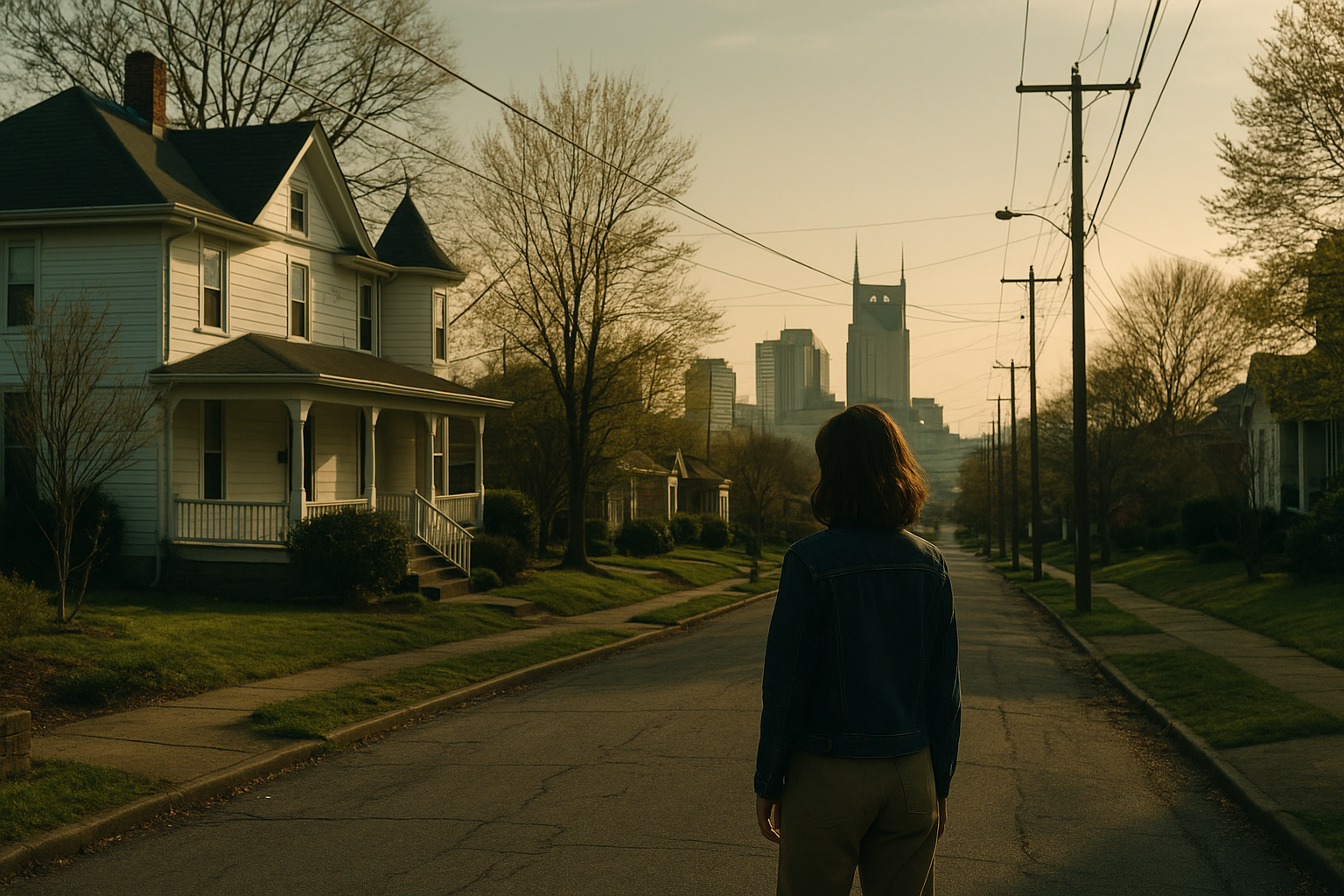
Nashville Real Estate 2026: What the Country Music Boom Means
The country music boom is reshaping who buys, where they buy, and what neighborhoods cost.
Nashville added around 15,000 music-industry jobs between 2020 and 2024, and the next wave is already visible. Labels are expanding writer rosters, production houses are doubling Nashville staff, and the city's live-music economy is pulling six-figure earners from LA and New York. That influx doesn't just change Broadway. It changes Sylvan Park rent, it changes Germantown sale prices, and it changes what you can expect if you list your house this spring. This article walks through the mechanics: who's moving here, which neighborhoods are tightening fastest, what the 2026 data actually says, and whether waiting makes sense if you're thinking about a move.
Who's Actually Moving to Nashville in 2026
The new arrivals aren't tourists. They're songwriters with publishing deals, A&R staff relocating from coastal offices, session musicians who can finally afford a house, and the infrastructure workers those people need: managers, lawyers, sound engineers, marketing coordinators. The median music-industry salary in Nashville sits around $68,000 according to Bureau of Labor Statistics occupational data, but the top quartile clears $110,000. That's enough to compete for homes in East Nashville, Inglewood, and parts of Donelson.
You're also seeing remote workers who want to be near the scene without working in it. Nashville's cost of living still undercuts LA and New York by 30 to 40 percent depending on the neighborhood, so people in adjacent creative fields are choosing Nashville as a base. That group skews younger, rents longer, and eventually converts to buyers when they settle. The result is sustained demand in both the rental and purchase markets, without the boom-bust cycle you'd see if one employer dominated the story.
Which Neighborhoods Are Tightening and Why
East Nashville and Germantown saw the first wave. Prices in those areas climbed 40 to 50 percent between 2019 and 2023, and inventory in early 2026 is thin. Anything under $500,000 in East Nashville moves in under two weeks if it's not a teardown. Germantown is similar but with a higher floor, most listings starting around $600,000. The tightness comes from desirability and supply: these neighborhoods are close to downtown, walkable, and the housing stock is finite.
The next tier includes Sylvan Park, The Nations, and Wedgewood-Houston. Sylvan Park has always been expensive, but it's now routinely crossing $700,000 for renovated bungalows. The Nations got discovered around 2020 and is still catching up, with new construction filling in gaps and prices rising 15 to 20 percent year over year. Wedgewood-Houston is the wild card: industrial conversions, new condos, and proximity to downtown make it attractive to the same buyers who would have picked East Nashville five years ago, but zoning complexity keeps inventory unpredictable.
Donelson, Inglewood, and Madison are where first-time buyers and music-industry workers with tighter budgets are landing. Prices in Donelson hover around $425,000 for a three-bedroom near the airport. Inglewood offers similar pricing with better walkability and a shorter commute to Music Row. Madison is farther out but still affordable, with some homes under $400,000 if you're willing to renovate. These neighborhoods will see the steepest percentage gains in 2026 because they're the next logical step as the core areas price out.
What the Numbers Say About 2026 Price Movement
Nashville's median home price sat around $465,000 in late 2025, per Zillow's metro-level estimates. Projections for 2026 vary, but most local brokerages expect 6 to 9 percent appreciation if interest rates hold near current levels. That's slower than the double-digit years of 2021 and 2022, but it's not a plateau. The appreciation is uneven: core neighborhoods might see 4 to 6 percent because they're already expensive and inventory is constrained, while emerging areas like Madison and Antioch could see 10 to 12 percent as buyers search for affordability.
Rent growth is following a similar pattern. Average rent for a two-bedroom in Nashville proper is around $1,850, up roughly 5 percent from a year ago. That's enough to make the rent-versus-buy calculation tilt toward ownership if you plan to stay more than four years, especially in neighborhoods where rent and mortgage payments are within $300 of each other. The catch is down payment: if you don't have 10 percent saved, renting still makes more sense while you build reserves.
The Tradeoffs Buyers and Sellers Face Right Now
If you're buying, the tradeoff is price versus rate. Waiting for prices to drop means potentially facing higher rates if the Fed pivots, and Nashville's fundamentals don't suggest a price correction. The metro is still growing, jobs are diversifying, and housing supply isn't catching up fast enough. Buying now locks in your rate and gets you into the market, but you're paying near-peak prices in many neighborhoods. The decision hinges on your timeline: if you're staying five-plus years, price matters less than getting in. If you're flipping in three, the math gets riskier.
If you're selling, inventory is still low enough that well-prepared homes move quickly. Spring 2026 is shaping up to be competitive, particularly in the $350,000 to $550,000 range where first-time buyers and relocators overlap. The risk is overpricing: Nashville buyers are informed, and anything that sits for 30 days gets a reputation. Price it right on day one, make sure the photos are professional, and you'll likely see multiple offers. Price it 8 percent high hoping someone bites, and you'll chase the market down for two months.
Should You Wait or Move Now?
Waiting makes sense if you're not ready financially, if your current living situation is stable, or if you're uncertain about staying in Nashville long-term. It doesn't make sense if you're hoping for a crash. Nashville's job growth, migration patterns, and housing supply dynamics don't suggest a 2008-style correction. Prices might flatten for a quarter or two, but betting on a 15 percent drop means potentially missing years of equity while paying rising rent.
For buyers who are ready, the move is to get pre-approved, identify two or three target neighborhoods, and act when the right property appears. Spring inventory will be better than winter, but competition will be fiercer. For sellers, list in March or April when buyer activity peaks, and make sure your pricing reflects current comps, not what Zillow says your neighbor's house sold for in 2023. The market rewards preparation and punishes wishful thinking on both sides.
Frequently asked
Is Nashville real estate overpriced in 2026?
Compared to five years ago, yes. Compared to peer metros like Austin or Charlotte, no. Nashville's median home price is around $465,000, which reflects strong job growth, sustained migration, and limited housing supply. Whether that's overpriced depends on your timeline and income. If you're planning to stay five-plus years and can afford the payment, the fundamentals support buying. If you're speculating on a quick flip, the risk is higher.
Which Nashville neighborhoods are best for first-time buyers?
Donelson, Inglewood, and Madison offer the best combination of affordability and access for first-time buyers in 2026. Donelson has homes around $425,000 near the airport with decent commutes. Inglewood is slightly pricier but more walkable and closer to downtown. Madison is the budget option, with some homes under $400,000, but you'll likely need to renovate. All three are seeing strong appreciation as core neighborhoods price out.
How much do I need for a down payment in Nashville?
Conventional loans typically require 5 to 20 percent down. On a $465,000 home, that's $23,250 to $93,000. FHA loans drop the requirement to 3.5 percent, or around $16,275, but come with mortgage insurance that raises your monthly payment. The real question is reserves: you'll also need 2 to 4 percent for closing costs and an emergency fund for repairs. Budget at least $35,000 total to buy with breathing room.
Will Nashville home prices drop in 2026?
Unlikely. Nashville's net migration remains strong, job growth is diversifying beyond music, and housing supply isn't keeping pace with demand. Most brokerages expect 6 to 9 percent appreciation in 2026, with slower growth in expensive core neighborhoods and faster growth in emerging areas like Madison and Antioch. A price drop would require a recession or a sudden spike in interest rates that kills buyer demand, neither of which appears imminent.
Is it better to rent or buy in Nashville right now?
If you're staying more than four years and have a down payment saved, buying usually wins. Average rent for a two-bedroom is around $1,850, and a mortgage on a $450,000 home at 7 percent runs about $2,850 with taxes and insurance. The gap narrows if you buy in an affordable neighborhood or put down 20 percent. Renting makes sense if you're unsure about staying, lack savings for a down payment, or want flexibility to move for work.