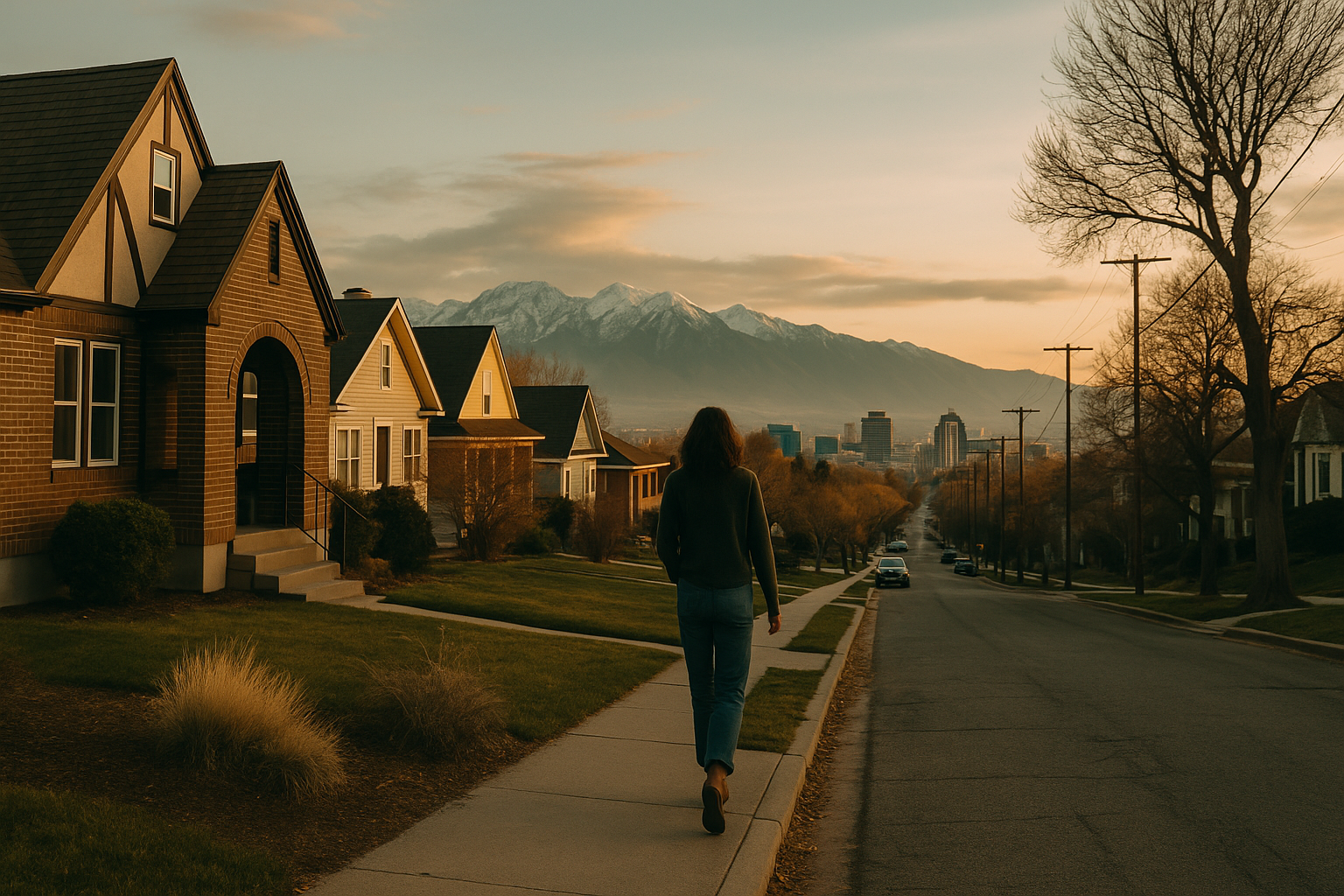
Salt Lake City Real Estate 2026: Tech Growth and Family Demand
Tech hiring and multi-generational demand are keeping inventory tight and prices climbing.
Salt Lake City's housing market in 2026 is shaped by two relentless forces: tech companies hiring thousands of engineers and Mormon families buying homes to stay near extended kin. The result is a market where inventory moves fast, median prices hover around $575,000 (per Zillow's Q4 2025 estimates), and bidding wars remain common in family-friendly neighborhoods. If you're thinking about buying or selling here, understanding how these dynamics play out at the neighborhood level will determine whether you overpay, miss out, or time it right. This article breaks down what's actually happening in the valley, where the pressure is highest, and how to make a smart move in a market that doesn't forgive guesswork.
Why Tech Companies Are Still Pouring Into Salt Lake
Salt Lake's tech sector has added roughly 30,000 jobs since 2020, according to the Governor's Office of Economic Opportunity. Companies like Adobe, Goldman Sachs, and a rotating cast of SaaS startups continue to expand here because labor costs are 25 to 30 percent lower than the Bay Area and the talent pipeline from BYU, University of Utah, and Utah State is steady. These aren't remote roles being filled from out of state. These are people relocating, often with families, often from California or Seattle, and they're buying homes in Draper, Cottonwood Heights, and South Jordan.
The wage growth that comes with these jobs (median tech salary in Salt Lake is around $95,000, per regional labor data) means buyers can qualify for mortgages in the $500,000 to $700,000 range. That price band is exactly where most single-family inventory sits. The mismatch isn't about affordability for this cohort. It's about supply. Builders haven't kept pace with migration, and the homes that do hit the market often get multiple offers within the first week.
The Mormon-Family Market and Why It Matters
Mormon families, especially those with young children, tend to buy homes near parents, siblings, and ward boundaries. This isn't speculative. It's cultural infrastructure. When a family decides to stay in Utah rather than move for a job, they're often prioritizing multi-generational proximity, which means they're competing for homes in specific neighborhoods, not just anywhere in the valley. That concentrates demand in pockets like Sandy, Riverton, Herriman, and parts of West Jordan where larger families can afford homes with four or more bedrooms.
The average LDS family size in Utah is around 3.6 people (per state demographic data), which is significantly higher than the national average. That pushes demand toward homes with more square footage, bigger lots, and access to good schools. It also means that when inventory is low, these buyers don't simply look elsewhere. They wait, save, or stretch their budgets. The result is sustained upward pressure on prices in neighborhoods where families want to be, even when interest rates tick up or the broader economy softens.
Which Neighborhoods Are Seeing the Most Pressure
Draper and Cottonwood Heights are the most competitive submarkets in 2026. Draper's proximity to tech offices (especially along the I-15 corridor near Point of the Mountain) and its strong school ratings make it a magnet for both tech workers and families. Homes in Draper listed under $650,000 typically receive multiple offers, and days on market average around 12, per local MLS data. Cottonwood Heights offers similar appeal with better access to Big Cottonwood Canyon, which matters to buyers who ski or hike regularly.
South Jordan and Herriman are the value plays, but they're heating up fast. Median prices in South Jordan sit around $525,000, and Herriman is closer to $490,000. Both offer newer construction, larger lots, and family-oriented amenities. The tradeoff is commute time. If you work downtown or in the Avenues, you're looking at 35 to 45 minutes in traffic. But if you're working remotely a few days a week or your office is in Lehi or Draper, these neighborhoods make a lot of sense.
Downtown Salt Lake and the Avenues are a different market entirely. Condos and townhomes here attract young professionals, empty nesters, and investors. Prices are lower on a per-unit basis (around $350,000 to $450,000 for a two-bedroom condo), but inventory is even tighter because there are fewer units to begin with. If you want walkability and aren't raising kids, this is where you should focus.
Inventory Constraints and What They Mean for Sellers
Salt Lake County had around 1.8 months of inventory in late 2025, per MLS aggregate data. Anything under three months is considered a seller's market. That means if you list a well-maintained home in a desirable neighborhood, you'll likely get an offer within two weeks. The key is pricing it right from the start. Overpricing by even five percent can cost you weeks of showing activity, and once a home sits for 30 days, buyers start assuming something's wrong.
The best time to sell in Salt Lake is still late March through June, when families want to close before the school year starts. But 2026 is different in one respect. Because interest rates have stabilized in the mid-six-percent range (per Freddie Mac weekly averages), buyer demand isn't as seasonal as it was in 2021 or 2022. You can list in September and still get strong offers if the home shows well and the price reflects recent comps.
What Buyers Should Watch in 2026
If you're buying in Salt Lake this year, your biggest risk is overpaying because you felt pressure from other offers. The way to avoid that is to know the comps cold before you ever write an offer. Look at closed sales in the last 90 days, not just active listings. Pay attention to price per square foot, lot size, and condition. A home listed at $600,000 might be worth $620,000 if it's been updated, or it might be worth $580,000 if it needs a new roof and HVAC.
Also, be realistic about what you can actually get at your price point. If your budget is $500,000, you're not buying in Draper unless it's a fixer or a small townhome. You're buying in Taylorsville, West Valley, or Kearns. Those neighborhoods have good bones and solid upside, but they're not the same market. The families who do well in Salt Lake are the ones who pick a neighborhood they can afford, buy the best house on the block, and hold for five to seven years.
How Octavius AI Helps You Move Faster
Octavius is built for markets like Salt Lake, where timing and data matter more than charm. Our platform pulls live MLS feeds, overlays them with migration data, school ratings, and price trends, and gives you a ranked list of homes that match your actual criteria, not just your wish list. You're not scrolling through 200 listings. You're looking at the 12 that make sense for your situation.
For sellers, we run comps in real time and tell you what your home will actually sell for, not what you hope it will sell for. Then we connect you with agents who know how to stage, price, and close in this market. No fluff, no three-month listing limbo. Just speed and clarity.
Frequently asked
Is Salt Lake City's housing market going to crash in 2026?
Unlikely. Salt Lake's market is driven by job growth and family formation, not speculation. Prices could flatten if mortgage rates spike above seven percent, but a crash would require mass job losses in tech and a sudden drop in migration, neither of which is forecasted. Expect slower appreciation, not a collapse.
What's the average home price in Salt Lake City right now?
The median single-family home price in Salt Lake County is around $575,000 as of early 2026, per Zillow estimates. That number varies widely by neighborhood. Draper and Cottonwood Heights are closer to $650,000, while West Valley and Kearns are around $425,000. Condos downtown average $350,000 to $450,000.
Should I wait for interest rates to drop before buying?
If rates drop meaningfully, competition will increase and prices will likely rise. Waiting makes sense if you're not ready to buy or if inventory is about to increase seasonally. But if you find the right home at a fair price, buy it. You can always refinance later if rates improve.
Which Salt Lake neighborhoods are best for families with kids?
Draper, Cottonwood Heights, South Jordan, and Herriman are the top choices for families. All four have strong schools, parks, and access to outdoor recreation. Draper and Cottonwood Heights are more expensive but closer to tech jobs. South Jordan and Herriman offer better value and newer construction.
How competitive is the Salt Lake market compared to Phoenix or Austin?
Salt Lake is more competitive than Phoenix but less frenzied than Austin was in 2021 and 2022. Homes in desirable neighborhoods still get multiple offers, but buyers aren't waiving every contingency or bidding 15 percent over ask. It's a tough market, but not irrational.