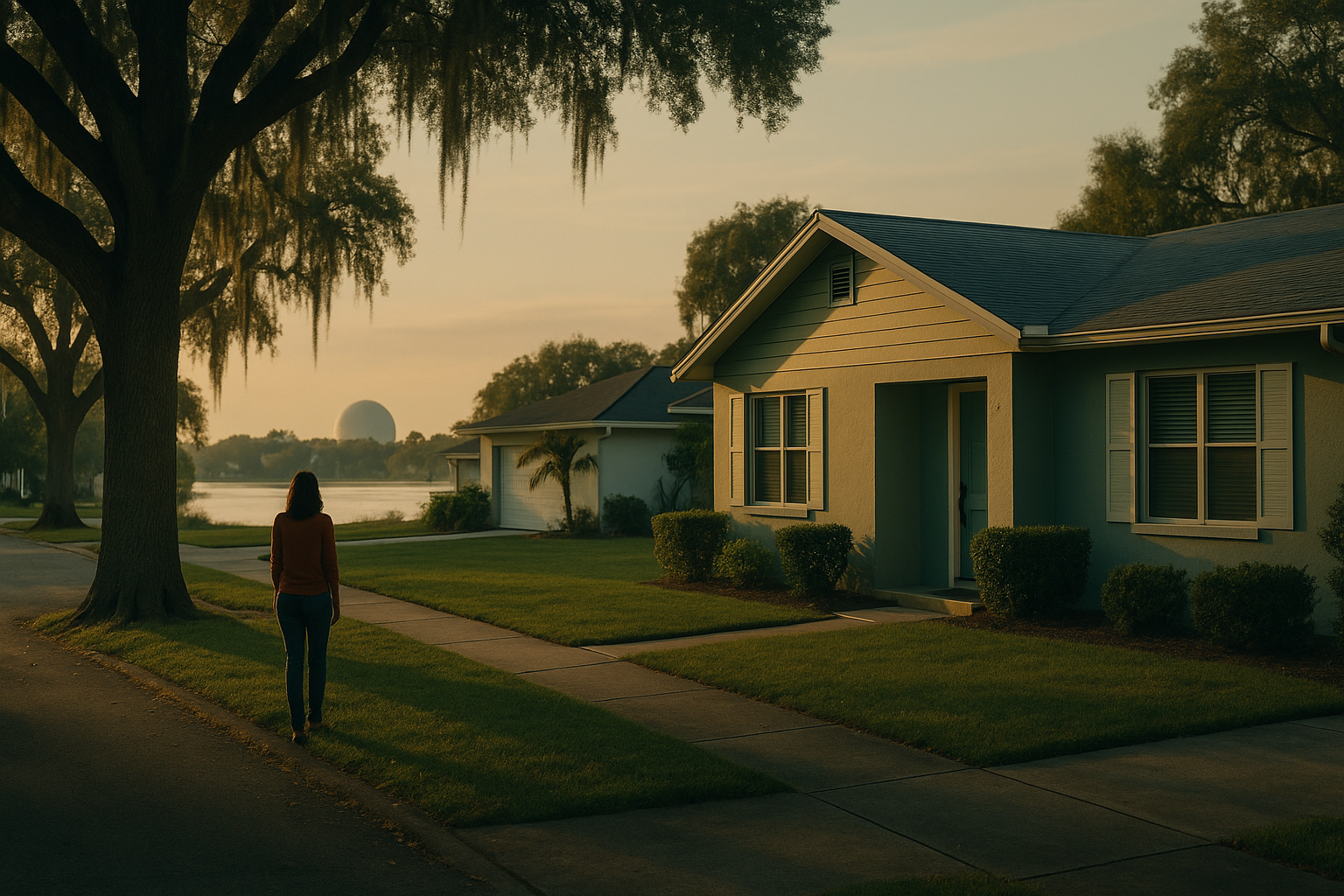
Orlando Real Estate 2026: Disney Economy and Family Buyers
Theme parks, service jobs, and family buyers are rewriting the rulebook.
Orlando's real estate market in 2026 is a function of one thing: the tourism economy. Disney, Universal, and SeaWorld employ around 100,000 people directly, and the ripple effect touches nearly every retail, hospitality, and service job in the metro. That means Orlando housing is cheap compared to coastal Florida, wages are lower, and the typical buyer is a family with kids who wants four walls and a yard within driving distance of work. If you're evaluating Orlando as a buyer or investor, you need to understand how the theme park economy shapes prices, where families actually want to live, and what happens when the Mouse sneezes. This isn't Miami. The rules are different.
How the Disney Economy Sets Orlando Home Prices
Orlando's median household income sits around $58,000, roughly 15% below the national average. That's because so much of the employment base is hospitality, retail, and food service tied to the parks. Universal just opened Epic Universe in 2025, which added thousands of jobs, but most of those jobs pay $16 to $22 an hour. The result is a price ceiling on housing. Median home prices in metro Orlando hover around $390,000 as of early 2026, compared to $520,000 in Tampa and $600,000 in Miami. Builders know they're selling to teachers, nurses, park employees, and mid-tier corporate workers, not tech money.
That ceiling is a feature, not a bug. Orlando is one of the last metros in Florida where a household earning $70,000 can still buy a single-family home without a co-signer or family money. The tradeoff is appreciation. Orlando homes have climbed around 4% to 5% annually over the past five years, solid but not explosive. If you're buying for appreciation arbitrage, you're in the wrong city. If you're buying for stability and a backyard your kids can use, Orlando delivers.
Where Families Are Actually Buying in 2026
Lake Nona and Clermont are the two family buyer magnets right now. Lake Nona has the medical city pull, newer builds, and A-rated schools like Lake Nona High. Median home price there is around $480,000, which is high for Orlando but justified by the jobs and infrastructure. Clermont, about 25 minutes west of downtown, offers similar new construction in the $360,000 to $420,000 range with better lake access and slightly lower density. Both neighborhoods are dominated by young families who work at the parks, the hospitals, or in corporate roles at EA, Deloitte, or the defense contractors clustered near the airport.
Winter Garden and Oviedo are the value plays. Winter Garden sits northwest of downtown along the West Orange Trail and offers older single-family stock in the $340,000 range. Schools are decent, and the commute to Universal or Disney is under 30 minutes. Oviedo, northeast of the city near UCF, skews slightly older and more established. Prices there run $370,000 to $450,000, and you're buying into Seminole County schools, which consistently outperform Orange County. Both areas have seen steady inbound migration from families priced out of Lake Nona or looking for more house per dollar.
What Happens When Tourism Softens
Orlando's vulnerability is straightforward. If a recession hits and families cut discretionary travel, the parks reduce hours and staffing. When that happens, thousands of service workers lose shifts or get furloughed, and suddenly the $1,900 rent or $2,200 mortgage looks impossible. The 2020 pandemic shutdown was the stress test. Occupancy in some apartment complexes near the park corridor dropped below 85%, and landlords offered two months free just to keep units filled. Home prices dipped about 6% in late 2020 before rebounding hard in 2021 as remote workers flooded in.
The 2026 version of that risk is different. Remote work has normalized, so Orlando now attracts a slice of tech and finance workers who want low taxes and space but don't need to live in a coastal hub. That diversification helps, but it's not enough to insulate the market. If you're buying in Orlando, build a cash cushion. The margin for error here is thinner than Tampa or Jacksonville because wage growth is slower and the employment base is more fragile. This is a market where you want six months of reserves, not three.
Schools, Taxes, and the Family Buyer Checklist
School quality drives everything for family buyers, and Orange County's public schools are a mixed bag. The top performers like Dr. Phillips High, Winter Park High, and Lake Nona High are legitimately strong, but the district average is middling. Seminole County schools in Oviedo and Lake Mary consistently score higher on state assessments, which is why families with kids often pay a premium to cross the county line. Private school is an option, but tuition at places like The First Academy or Lake Highland Prep runs $12,000 to $18,000 per year per kid, which adds up fast on a $70,000 household income.
Florida has no state income tax, which helps, but Orange County property taxes run around 1.1% to 1.3% of assessed value annually once you factor in school levies and municipal add-ons. On a $400,000 home, that's $4,400 to $5,200 per year. Homestead exemption knocks off $50,000 of assessed value if you're a primary resident, which saves around $600 annually. HOA fees in newer communities like Lake Nona or Clermont typically run $150 to $350 per month for lawn care, pool access, and common area maintenance. Add it all up and the total monthly nut for a $400,000 home with 20% down is around $3,100 including property tax, insurance, HOA, and principal and interest at current rates.
Investment Buyers and the Short-Term Rental Equation
Orlando is one of the best short-term rental markets in the country because of park proximity. A three-bedroom house within 15 minutes of Disney can gross $50,000 to $70,000 annually on Airbnb if you nail the listing and manage turnover well. The math works because occupancy stays high year-round. Families visiting the parks need a place to stay, and hotels near the gates run $200 to $400 per night. A whole house for $250 per night is competitive, especially for groups of six or more.
The catch is regulatory risk and overhead. Orange County has debated short-term rental restrictions multiple times, and some HOAs explicitly ban them. Osceola County, which includes Kissimmee and the southern park corridor, is more permissive but also more saturated. If you're buying for STR income, expect to spend 20% to 25% of gross revenue on management, cleaning, maintenance, and platform fees. A $400,000 house that grosses $60,000 annually might net you $20,000 to $25,000 after all expenses, which is a 5% to 6% cash-on-cash return assuming you financed with 25% down. That's decent but not a home run, and it requires active management or paying someone to do it for you.
Frequently asked
Is Orlando a good place to buy a house in 2026?
Orlando works if you're a family buyer who prioritizes affordability and space over rapid appreciation. Median home prices around $390,000 are reachable on middle-income salaries, and neighborhoods like Clermont and Winter Garden offer decent schools and new construction. The downside is slower wage growth and economic vulnerability tied to tourism. If you have stable employment and a cash cushion, Orlando delivers value. If you're chasing quick equity gains, look elsewhere.
What are the best family neighborhoods in Orlando?
Lake Nona and Clermont lead for families willing to pay a premium for newer homes and strong schools. Winter Garden and Oviedo are the value plays, offering solid school districts and lower price points in the $340,000 to $370,000 range. Oviedo gets you into Seminole County schools, which consistently outperform Orange County. Factor in commute time to your job and whether you need proximity to the parks or the airport.
How does the Disney economy affect Orlando home prices?
Disney and the broader tourism sector employ around 100,000 people directly and shape the entire wage structure. Most park jobs pay $16 to $22 per hour, which keeps median household income below the national average and limits how much buyers can afford. That creates a price ceiling. Median home prices in Orlando are 25% to 35% lower than Tampa or Miami. Appreciation is steady but not explosive, and the market is vulnerable to tourism downturns.
Can you make money with a short-term rental in Orlando?
Yes, but it requires the right location and active management. Houses within 15 minutes of Disney can gross $50,000 to $70,000 annually on Airbnb with occupancy around 70%. After management fees, cleaning, maintenance, and platform costs, expect to net 5% to 6% cash-on-cash if you financed with 25% down. Regulatory risk is real. Some HOAs ban short-term rentals, and Orange County has debated restrictions. Do your zoning homework before you buy.
What happens to Orlando real estate during a recession?
Tourism jobs evaporate faster than other sectors, so unemployment spikes and some buyers lose income. During the 2020 shutdown, home prices dipped around 6% and apartment occupancy dropped below 85% in some park-adjacent complexes. The market rebounded quickly because remote workers moved in, but that tailwind may not repeat in the next downturn. Build a six-month cash reserve if you're buying in Orlando. The margin for error is thinner here than in more diversified metros.