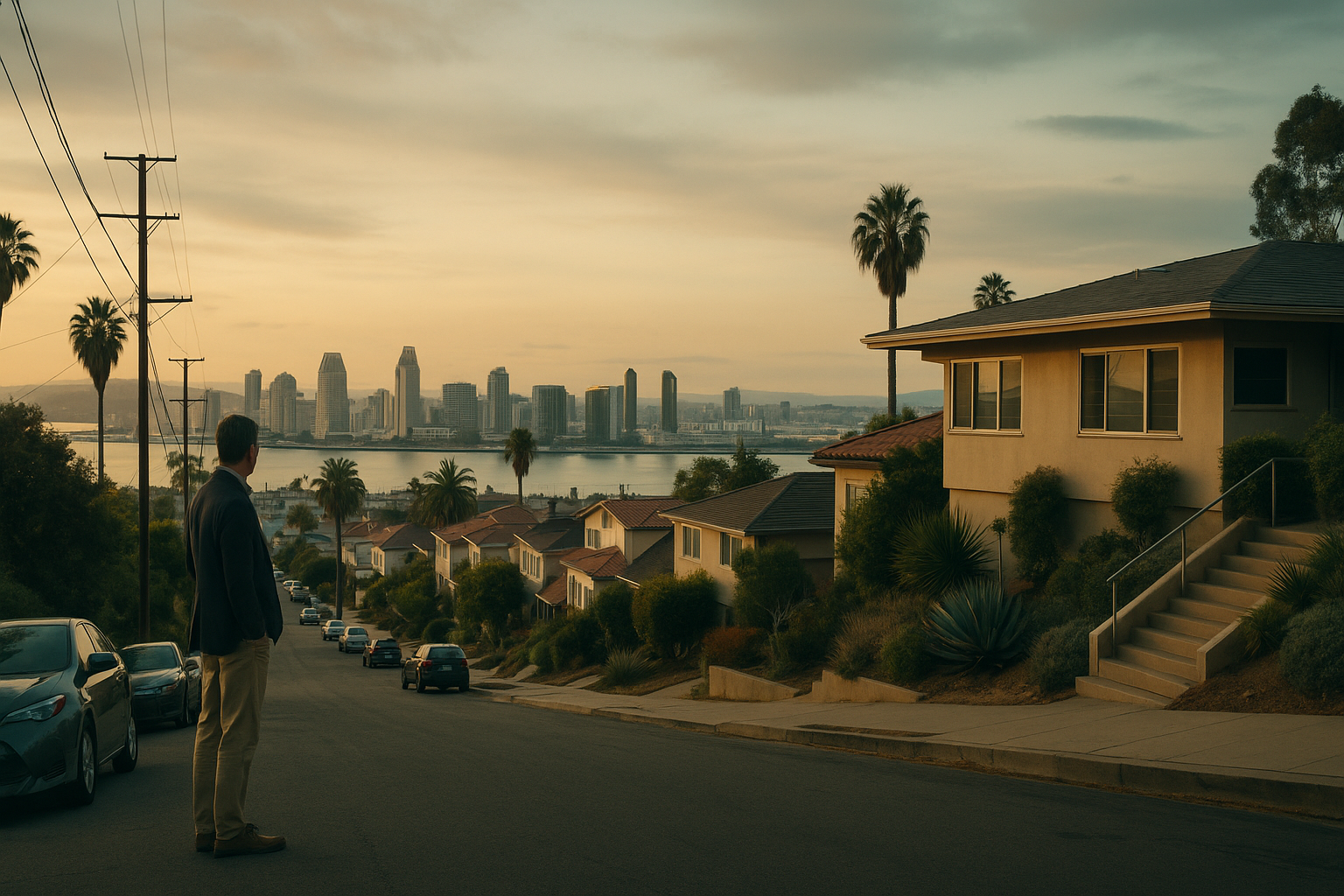
San Diego Real Estate 2026: Military, Biotech, New Buyers
Defense contractors are staying put, biotech talent is flooding in, and the 2026 buyer looks nothing like 2019.
San Diego's real estate market has spent decades running on two engines: military transfers and retirees chasing weather. That's changing. Base housing allowances haven't kept pace with rents, so fewer service members are buying near duty stations. Meanwhile, biotech job postings in Sorrento Valley and UTC are up around 40 percent since 2022, per industry surveys, and those workers want walkable density, not cul-de-sacs in Poway. Add in delayed infrastructure projects, stalled coastal development, and a shortage of move-in-ready homes under a million dollars, and you've got a market that rewards preparation. This article breaks down who's actually buying in San Diego right now, where the demand is concentrating, and what that means if you're selling, buying, or trying to time either move into 2026.
Military Buyers Are Staying Longer, Buying Less Often
For years, permanent change of station orders drove predictable turnover in Mira Mesa, Clairemont, and neighborhoods ringing Naval Base San Diego and Camp Pendleton. But Basic Allowance for Housing rates have lagged local rent growth by double digits since 2020, and that's pushing more active-duty families into base housing or longer-term rentals. Anecdotally, lenders report fewer VA loan applications from first-time military buyers and more refinance activity from members who bought years ago and plan to stay through retirement.
This doesn't mean military demand disappears. It concentrates among higher-ranking personnel, defense contractors with stable civilian salaries, and veterans using VA benefits after separation. Those buyers still favor the I-15 corridor from Miramar to Escondido, where you can find three-bedroom homes in the $700,000 to $850,000 range. But the churn that used to fuel inventory in those neighborhoods has slowed, which means fewer comps, longer list times, and buyers who need to move fast when something decent hits the market.
Biotech Is the New Economic Anchor, and It Wants Urban Density
Illumina, Dexcom, and a growing roster of genomics and device companies have made Sorrento Valley, UTC, and Torrey Pines the center of gravity for high-salary job growth. These aren't service members rotating every three years. They're PhDs, engineers, and project managers who expect six-figure salaries, equity packages, and the kind of walkable urbanism they had in Boston or the Bay Area. That's driving demand in neighborhoods most San Diegans ignored a decade ago: Hillcrest, North Park, even parts of downtown that were purely tourist zones in 2015.
The mismatch is obvious. Biotech workers want condos near transit and restaurants. San Diego built single-family sprawl for 50 years. New high-density projects are coming online around Old Town Transit Center and in Mission Valley, but supply is still tight, and anything move-in-ready under $800,000 in a walkable ZIP code gets multiple offers within days. If you're selling a two-bedroom condo in University Heights or a townhome near the Blue Line, you're in the sweet spot for this buyer.
Where Inventory Is Actually Moving in 2026
Price matters, but so does product type. Detached single-family homes in the $1.2 million to $1.8 million range are sitting longer than they did two years ago, especially in car-dependent suburbs like Scripps Ranch or Rancho Peñasquitos. Buyers in that price band have options, and they're pickier about lot size, school ratings, and commute flexibility. Homes that need work or have awkward floor plans can linger for months.
The action is in two places. First, anything under $900,000 that's renovated or new construction, particularly east of the I-15 or in South Bay neighborhoods like Chula Vista and Bonita. These areas attract first-time buyers, healthcare workers commuting to Sharp or Scripps hospitals, and cross-border professionals who work in Tijuana's growing tech sector. Second, condos and townhomes near job centers. Sorrento Mesa, Kearny Mesa, and parts of Mission Valley are seeing buyer competition that feels more like 2021 than 2023, because biotech commuters will pay a premium to shave 20 minutes off their drive.
Infrastructure Delays and the Coastal Development Squeeze
San Diego's housing shortage isn't news, but the bottleneck is getting worse. Coastal development faces environmental review timelines that can stretch five years, and inland projects are hamstrung by water, sewer, and road capacity limits. The city approved rezoning around transit corridors in 2022, but actual construction lags by 18 to 24 months, and most of that new supply won't hit the market until late 2026 or 2027.
This creates a window. If you're a buyer who can close in the next 12 months, you're competing in a market where supply is still constrained but rates have come down from their 2023 peaks. If you're a seller, you're playing offense before a wave of new condos and townhomes adds competition in walkable neighborhoods. Either way, the advantage goes to people who move while the gap between demand and supply is still wide.
What This Means for Buyers and Sellers Through 2026
If you're buying, know your lane. First-time buyers should focus on South Bay, eastern suburbs like Santee or La Mesa, or resale condos in job-center neighborhoods. Biotech professionals with bigger budgets should prioritize walkability and transit access over square footage. Investors should look at cash-flowing rentals near hospitals, universities, and the trolley, where tenant demand stays consistent regardless of economic noise.
If you're selling, price and presentation matter more than they did in 2021. Overpricing by 10 percent will cost you 60 days on market and force a reduction that spooks buyers. Homes that show well and price within 5 percent of recent comps move fast. If your property fits the biotech buyer profile, meaning it's urban, modern, and under $900,000, you've got leverage. If it's suburban single-family over a million, expect a longer process and buyers who'll negotiate hard on inspection repairs.
Frequently asked
Is San Diego real estate still a good investment in 2026?
San Diego's job growth in biotech and healthcare, combined with constrained housing supply, supports long-term price stability. The market isn't appreciating at 2021 rates, but it's not crashing either. Investment quality depends on location. Properties near transit, job centers, and hospitals tend to hold value and rent well. Suburban single-family homes in the $1.5 million range are softer because inventory has increased and buyer demand is more selective.
Are military buyers leaving the San Diego housing market?
They're not leaving, but they're buying less often. Housing allowances haven't kept up with local prices, so more active-duty families rent or live on base. The military buyers who do purchase tend to be higher-ranking personnel, defense contractors, or veterans planning to stay long-term. This shift reduces turnover in traditionally military neighborhoods like Mira Mesa, which means less inventory but also more stable demand from buyers who aren't rotating out every few years.
Where should biotech workers buy in San Diego?
Biotech employees commuting to Sorrento Valley or UTC should prioritize North Park, Hillcrest, Mission Valley, and neighborhoods near the trolley or Coaster lines. These areas offer walkability, dining, and reasonable commutes. Condos and townhomes under $850,000 move quickly. If you want single-family, look at Clairemont or Kearny Mesa for more space at a lower price, though you'll trade walkability for square footage.
What's the best time to sell a home in San Diego in 2026?
Spring and early summer remain the strongest selling windows, but San Diego's year-round weather softens seasonal swings. The key is pricing correctly from day one. Homes priced within 5 percent of recent comps and staged well can sell in under 30 days regardless of month. If your home appeals to biotech buyers, meaning urban location and modern finishes, you'll see faster activity. Suburban homes over a million should expect 60 to 90 days on average.
Will new construction in San Diego lower home prices?
New construction will add supply, but it's mostly condos and townhomes in transit-oriented areas, priced for dual-income professionals. This may ease competition in those specific segments, but it won't flood the market with affordable single-family homes. Permitting delays and construction timelines mean most new units won't deliver until late 2026 or 2027. Prices will stabilize, not collapse, because demand from biotech and healthcare job growth remains strong.